
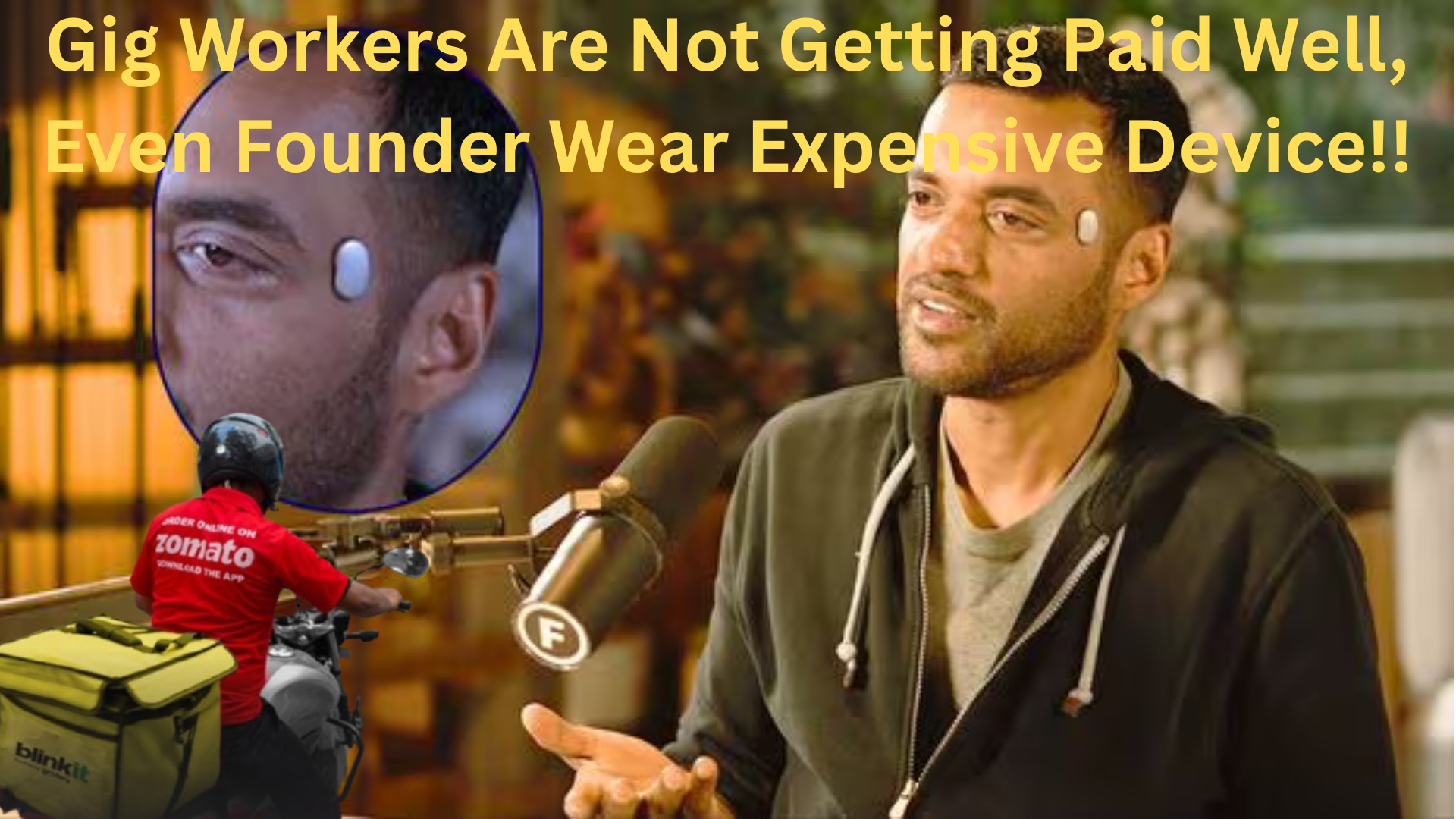
Why Deepinder Goyal Generated Massive Buzz with the ‘Temple’ Device
When Deepinder Goyal, the founder and CEO behind Zomato and now the tech venture Eternal, appeared on Raj Shamani’s popular “Figuring Out” podcast recently, the world wasn’t talking just about his entrepreneurial journey — they were fixated on a small gadget attached to his temple. What looked like a quirky accessory triggered massive online curiosity and speculation, instantly turning this unusual moment into a viral phenomenon.
The device, now widely shared across social media, is called Temple — a compact wearable designed to continuously monitor brain blood flow in real-time. This simple visual twist shifted some audience attention from technical business discussions to a broader conversation about wellness tech, innovation and longevity science.
Why Deepinder Goyal wear this Expensive Device?
- Deepinder Goyal wears Temple: a brain monitoring, blood flow measuring device.
- This is Zomato's next big venture.
For a firm to eventually sustain: you need a high paying ecosystem. Amazon did this with AWS.
And, Deepinder Goyal is quietly building towards that.
As a stock investor: you will make money when this transition is complete. But, it might take a while.
Deepinder Goyal’s Journey & Podcast Highlights
Before Temple captured headlines, Deepinder Goyal was already known globally as the co-founder and CEO of Zomato, the food delivery giant that reshaped India’s digital ordering ecosystem. But he’s not one to stay within a single lane. Beyond food tech, Goyal is exploring broader questions about human health — especially aging and longevity.
On the Raj Shamani podcast, Goyal shared:
- His personal journey from building Zomato into a household name to branching out into bio-tech research.
- The inspiration behind Temple — born from his curiosity about the effects of gravity on human aging.
- How he’s been self-testing the wearable for over a year as part of this research initiative.
His early comments sparked serious public interest, not just because of what he said, but because he wore the prototype on national video — turning it into an organic buzz generator without a traditional product launch.
What Is the ‘Temple’ Device?
Temple is described by Goyal as an experimental wearable sensor that attaches near the temple to measure cerebral blood flow continuously and in real-time. The theory behind it is that blood flow patterns are linked to cognitive health, ageing and longevity — if you could track them continuously, you might unlock insights into how lifestyle, posture, and environment affect brain wellbeing.
It’s not a fitness tracker like a smartwatch or step counter; rather, it aims to be a next-generation brain health monitor — something normally only measured in clinical settings using MRI or Doppler devices.
Key points about Temple:
- Still experimental and not yet commercially available.
- Developed under Goyal’s personal research initiative (Continue Research), not as a Zomato product.
- Running on advanced sensors designed to infer cerebral blood flow patterns.
Cost, Availability & Benefits
Because Temple has not been released commercially, there’s no official price yet and it isn’t sold anywhere publicly. Reports suggest Goyal has invested heavily — nearly $25 million (~₹225 crore) — into this research, indicating long-term ambitions if the device ever reaches market readiness.
Potential benefits claimed by Goyal and supporters include:
- Continuous monitoring of brain blood flow.
- Insights into focus, stress, sleep and cognitive health.
- A new personal wellness metric for longevity research.
However, medical experts urge caution. Many neurologists and doctors have said that such wearables lack validated clinical proof, and current evidence does not confirm whether Temple actually delivers medically meaningful results. An AIIMS doctor even called it a “fancy toy for billionaires.”
Why It Blew Up
Goyal’s decision to wear the prototype casually on a widely viewed podcast was genius from a PR standpoint — it created worldwide buzz without any traditional advertising spend, turning curiosity into organic media coverage and online debates overnight.
It’s a masterclass in founder-led storytelling: mix curiosity, innovation, and a pinch of mystery — and suddenly an obscure research prototype becomes the talk of India.